Monday, 22 July 2019

学 | 學

学 is another good example that simplified Chinese character system simplifies too much that many of the characters lost their meaningful representation those characters should have.

Looking at the traditional version 學, we can kind of reasoning the scene it represents: a kid (子) is playing 爻 with his both hands (), probably on a table ()?
 
You might now have a vague idea what this character is. Before revealing the answer, let us examine its ancient scripts to see if there can be more information available: (image taken from:http://vividict.com)
Evolution history of 学

From its Oracle script, 学 is drawing of 爻 ( ) on a small table 几 (). 

Another Oracle script provides more information which shows two hands () playing / holding a 爻 (), inside a house ().  

 However both  and  is still quite vague in representing the concept 学 has. Thus Bronze script  added 子 () under the house (). Now the full concept is clear: (somebody) uses two hands () to show how 爻 works to a kid () sitting inside a house (). It is a teaching process with the kid learning how 爻 works.

From these scripts above, it does emphasize the teaching part of study during the learning process during those era. when it came to Regular script era, learning process in China might have changed to focus on try-error and self learning of the kids in the class, thus Regular Script emphasized the initiative of the students during the learning process, with its two hands changed to  (which are of the kid).


That is all, 学 | 學 has the meaning of learn or study. for example 学习.

When 学 | 學 is used as noun, it is to mean knowledge or experience or capability. for example 才疏学浅.

knowledge or experience can be built up to become a knowledge system or a (research) subject. for example 数学.

We have done our study of 学, time to enjoy a Chinese calligraphy with 学 inside:
学海无涯

Saturday, 29 June 2019

爻

We have left a few unknown Chinese characters before we can fully understand the first and most important sentence of the Confucianism classic: <<论语>> - 学而时习之,不亦说乎?With a full understanding of the original meaning of each of these characters, we will have a much better comprehension of this sentence.

As the title, the character today is 爻. Its ancient scripts are pretty much the same as what we write today: (image taken from: http://vividict.com/)
Evolution history of 爻

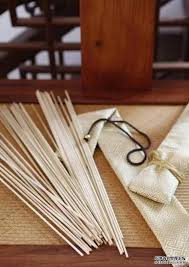
It is pretty hard to know what it is if you do not have in-depth knowledge of Chinese culture. 爻 is the most important tools for ancient Chinese wizard to calculate or predict what to happen in the future:
Fortune Teller

爻 is composed of two 乂, which is the drawing of two sticks crossing each other. Two sticks represents Ying (阴) and Yang (阳) . 

爻

So 爻 is the most basic element of the universe: a pair of Ying (阴) and Yang (阳). And it is also used to represent the most basic element of 八卦 / Bagua (https://en.wikipedia.org/wiki/Bagua) or 易经 / I Ching (https://en.wikipedia.org/wiki/I_Ching).

 That is all for 爻, now it is time to enjoy a Chinese calligraphy with it inside:
摹元羲之灵爻,仰东宿之飞景。
下沉瓶而互汲,蜚织绠而幽牵。
澄澜恬以清渟,泓冷朗己宁戾。

Tuesday, 7 May 2019

计 | 計

We have studied enough characters related to 牛 / 羊.  With Chinese Radicals learnt during our learning journey, we now have many low-hanging fruits to pick up, like the Chinese Character today - 计 | 計.

It is easy to tell that 计 is composed of 讠and 十 ( or 言 and 十 with Traditional version 計).
As we know 讠 or 言 means say or speak (to refresh your memory, you can check the post: https://xiongzou.blogspot.com/2015/11/learn-one-chinese-character-day_17.html). and 十 means number ten (Details please check https://xiongzou.blogspot.com/2015/11/learn-one-chinese-character-day_10.html).

What does the combination mean here? Possible candidates as:
1. Speak out number ten;
2. Count to number ten;

Both options are actually representing pretty much the same scenario: counting numbers.

With all fingers of our two hands, we can count up to 10 easily, so 计 | 計 is kinds of showing the concept of counting (fingers) to ten.


So 计 | 計 means counting. For example: 计数

As number counting related to calculations, 计 | 計 has the original meaning of calculate and all of its extended meanings. For example: 计划

For 计 | 計 is counting numbers, when it is used as noun, it refers to any metering device with scale: like 温度计

Before ending our study today, let us check its ancient scripts, as shown below (image taken from http://vividict.com/)
Evolution history of 计 | 計
It is obvious that the components of 计 | 計 has not been changed from era of Oracle Script.

That is all for 计 | 計. Let us enjoy a Chinese calligraphy with 计 inside as usual to end our study today:
一年之计在于春

Monday, 22 April 2019

Learn one Chinese Character a day - 牵 | 牽

Our character today 牵 is also related to 牛. Upper part of 牵 is kind of ambiguous. Its Traditional version 牽 provides more information, which contains 玄,  and 牛. As what we learnt with 丝 (https://xiongzou.blogspot.com/2016/01/learn-one-chinese-character-day_6.html), lower part of 玄 is related to silk: .  That is all we can get so far, ancient scripts of 牵 would help us as usual: (image taken from http://vividict.com)
Evolution history of 牵
Oracle script is quite obvious now, rope () is tied to a kind of nostril ring () to lead the buffalo ().
牵牛


Seal Script represented the idea clearer: a hand () use a rope () to lead a buffalo ().

That is the original meaning of 牵 | 牽 - "lead along a buffalo".

Getting back to Tradition character 牽, which is 玄,  and 牛. now we can guess that could be ox yoke.

Ox Yoke
So 牵 | 牽 is used to mean lead along, for example 牵手.

Since 牵 | 牽 contains the representation of connecting with a buffalo using a rope. thus 牵 | 牽 is also extended to mean "connected to / connected with". For example 牵连.

That is all, let us enjoy a Chinese calligraphy with 牵 | 牽 inside:
天街夜色凉如水;
卧看牵牛织女星。

Monday, 8 April 2019

Learn one Chinese Character a day - 解

Our character today 解 is a quite complicated one related to 角 we just learnt, which can be dissected into 3 components that we know: 角 (horn), 刀 (knife) and 牛 (buffalo). What is the aggregated meaning of the combination: 解? Does it mean to use knife to cut the horn off the buffalo?

Let us see if any help we can get from its ancient scripts: (image taken from http://vividict.com)
Evolution history of 解
Its Oracle script is the drawing of two hands () taking away the horn () of a buffalo (). When it comes to Seal script ,  two hands () is replaced by a knife () to represent the idea clearer. which is indeed to cut the horn off the buffalo. this is 解's original meaning. For example 庖丁解牛.


Based on its original meaning, 解 is extended to mean dissect, break up or cut up. For example 解剖.

Since 解 contains the meaning of "to divide and separate parts of a buffalo", 解 is also used to mean untie. 解开.

Once the buffalo is finally dissected, it means the task is accomplished, 解 thus has meaning of resolve. for example 解决.

That is all for 解, time to enjoy a Chinese calligraphy with 解 inside:

一瘦解千愁

Monday, 25 March 2019

Learn one Chinese Character a day - 角

Looking at the character 角, it seems impossible to guess its meaning with its current form. Let us see what we can get from its evolution history: (image taken from http://vividict.com)
evolution history of 角
 Now looking at its Oracle scripts  and , and especially its Bronze script , They look much like what they draw, as shown below:

角

Yes, 角 is the drawing of a horn of a buffalo or sheep.

Since 角 has sharp tip, it also used to represent something that is at a corner or with sharp tip. For example 角落.

Since angle in mathematics looks like a 角 in shape, angle is called 角 in Chinese, for example triangle is called 三角形.

That is all for 角. Time to enjoy a Chinese calligraphy with 角 inside:
羚羊挂角